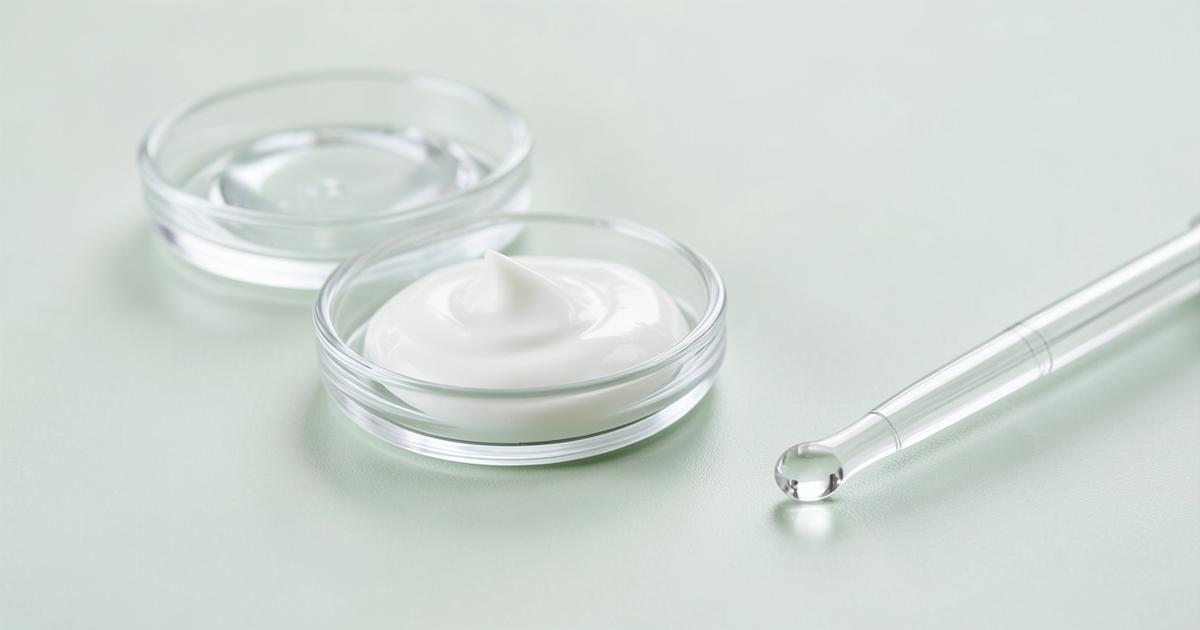
What Squalane does
Human sebum contains squalene; squalane is the hydrogenated, shelf-stable version. It slots into the skin's lipid layer, softening texture and slowing water loss.
Because it is fully saturated it does not oxidise the way plant oils do, so it rarely goes rancid or triggers the reactivity some oils cause.
Worth using if…
- Dry and dehydrated skin
- Sealing in a humectant serum
- Sensitive skin that reacts to fragrant oils
Safety & watch-outs
- It is an emollient, not a treatment — it will not fix acne, pigmentation or lines.
- Very oily skin may still find it too rich as a final layer.
Squalane in pregnancy: Not on standard avoid lists
Not on standard pregnancy avoid lists.
Fungal acne (): does not feed it
Saturated hydrocarbon, no fatty acid to metabolise. The fungal-acne yeast feeds on fatty acids roughly C11–C24 and the esters built from them, so what matters in a finished formula is the whole list, not one ingredient.
Check a whole formula for malassezia triggers →Comedogenic rating: 1/5 · low risk
Rated 1 on the Fulton scale — low risk for most people. Ratings come from the published Fulton scale, which was measured on rabbit ears rather than human faces — treat it as a rough signal, not a verdict on a finished formula.
Check a whole formula for pore cloggers →Common questions
Squalane or squalene?
Squalane (with an a) is the stable version used in skincare. Squalene oxidises quickly and is not what you want in a bottle.
Informational only, not medical advice. Written from public regulatory and dermatology references (EU Cosmetics Regulation annexes, SCCS opinions, CIR reviews, published Fulton-scale data). Concentration, formula and your own skin all change the outcome — consult a clinician for personal concerns.
Related ingredients
All ingredient explainers
AllantoinAlpha ArbutinAvobenzoneAzelaic AcidBakuchiolBenzoyl PeroxideCentella Asiatica ExtractCeramidesCoconut OilDimethiconeGlycerinGlycolic AcidL-Ascorbic AcidLactic AcidNiacinamidePanthenolPeptidesRetinolSalicylic AcidSodium HyaluronateTitanium DioxideTranexamic AcidUreaZinc Oxide